
A Bigger Zero-Turn Mower Isn’t Always Better
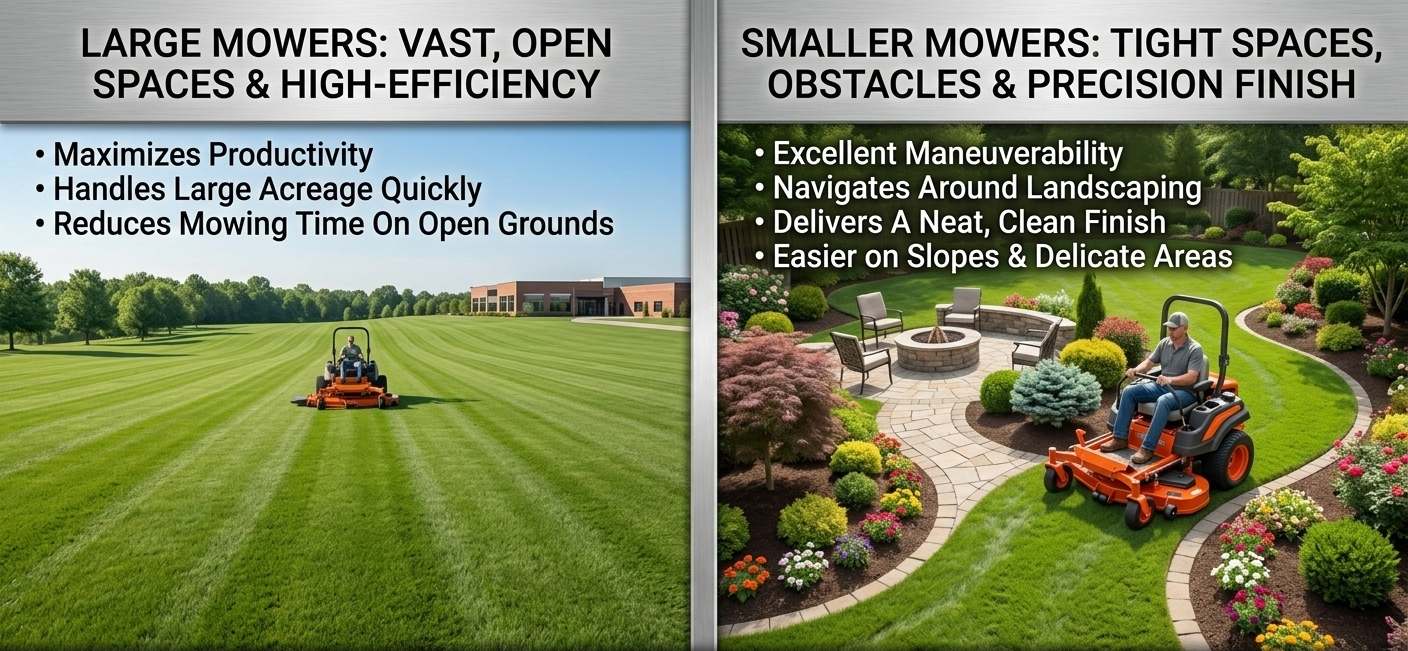 |
In South Louisiana, mowing is almost year-round. Warm temperatures and fast-growing St. Augustine and Bermuda grasses keep lawns growing quickly in Baton Rouge, Gonzales, Prairieville, and other surrounding areas. For homeowners, this often leads to the idea of upgrading to a zero-turn mower. But one of the most common questions we hear isn’t about brand or horsepower—it’s about size. The answer isn’t always simple. While larger decks and more powerful engines may seem like the obvious solution, bigger isn’t automatically better for most residential yards. In fact, a mower that’s too large can create problems, from damage to turf to unnecessary operator fatigue. Understanding how property layout, terrain, and usage patterns affect mower efficiency is key to making the right choice. |
Yard Layout Matters More Than Acreage
A common mistake is choosing a zero-turn mower based solely on acreage. In many Southern Louisiana neighborhoods, even a one-acre property can have curved fences, flower beds, drainage ditches, and other such similar factors that make straight-line mowing impossible.
A mid-sized deck often provides better flow across the entire yard. It allows easier turns, and keeps trimming faster in tight areas. In some cases, spending a few extra minutes making more passes with a properly sized mower results in less overall effort than fighting a machine that’s too large.
Maneuverability, Deck Width, and Horsepower
Zero-turn mowers are designed for tight turns, but only when the machine fits your space. Oversized units can feel bulky navigating tree clusters and tight, blocked-out areas. Operators may slow down to avoid scalping or damaging the turf. Over a full mowing season, these small adjustments add up to extra time and effort.
A mower sized to your property allows smoother turns and fewer corrections in equal parts. For homeowners mowing weekly – sometimes more – comfort and ease of use are just as important as deck width.
To boot, matching engine size to deck width and mowing conditions delivers smoother operation and better fuel efficiency over time. Commercial-grade power is ideal for professional crews or large open properties, but residential yards often perform best with mid-range horsepower.
Weight and Ground Conditions in South Louisiana
Local soil and weather conditions also play a major role. Frequent rain, high humidity, and soft ground are common throughout the year. Larger zero-turn mowers weigh more, which can lead to:
- Turf rutting after rain
- Reduced traction on slopes or banks
- Increased lawn damage during sharp turns
For properties with softer ground or uneven terrain, a slightly smaller mower often provides better balance and control. This is especially important in spring and early summer when grass grows aggressively and the soil retains moisture.
A mower that’s easier to control helps protect your lawn and makes mowing a more comfortable task overall.
Maintenance and Long-Term Ownership Costs
Lastly, larger mowers often come with higher ongoing costs. Replacement blades, belts, and other wear components typically cost more as size increases. Fuel consumption also rises with weight and engine size.
A mower properly sized to your property usually requires fewer adjustments, and, in the end, is easier to clean and maintain. Over several seasons, this can reduce long-term expenses and prevent unexpected repairs.
Go With Gautreaux’s!
If you’re questioning whether your current zero-turn mower is the right size for your property, stop by Gautreaux’s Outdoor Power at 39285 Hwy 74, Gonzales, LA 70737.
Our team can help you compare mower options designed for South Louisiana lawns and guide you to the machine that best fits your property and mowing needs. Visit in person or contact us online to plan your next mower purchase with confidence!